
A Truly Unusual Figure in American History
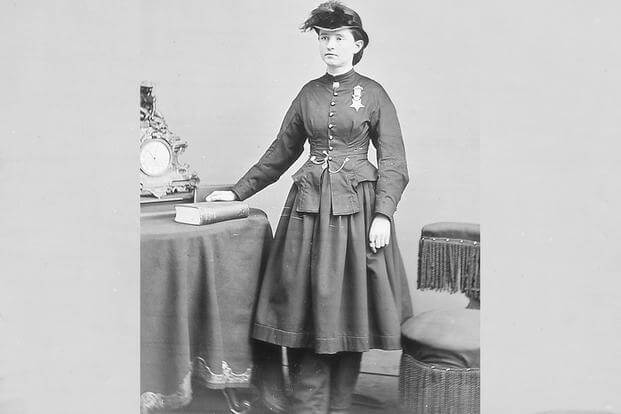
American history is filled with remarkable individuals, but few are as unconventional—and entirely real—as Dr. Mary Edwards Walker. A Civil War surgeon, prisoner of war, and outspoken activist, Walker remains the only woman ever awarded the Medal of Honor, one of the highest military honors in the United States.
Her life reads like something out of fiction, yet every part of her story is grounded in historical fact.
A Woman Ahead of Her Time
Born in 1832 in New York, Mary Edwards Walker grew up in a household that valued education and independence. At a time when women were rarely encouraged to pursue careers, she attended medical school and earned her degree in 1855—becoming one of the few female physicians in the country.
But Walker didn’t just challenge expectations through her career. She also rejected traditional women’s clothing, choosing instead to wear practical attire that included trousers. This decision alone made her a controversial figure in 19th-century America.
Serving as a Civil War Surgeon
When the Civil War began in 1861, Walker volunteered to serve as a surgeon for the Union Army. Despite her qualifications, she was initially denied a formal position because she was a woman.
Undeterred, she worked as a volunteer surgeon, treating wounded soldiers near the front lines. Eventually, she was appointed as a contract surgeon, making her one of the first female surgeons to serve in the U.S. Army.
Walker often crossed battle lines to treat civilians and injured soldiers, regardless of which side they were on—a rare and risky practice during wartime.
Captured by the Confederacy
In 1864, while assisting civilians in Confederate territory, Walker was captured by Confederate forces. She was accused of being a spy—partly because she was a woman traveling alone in unconventional clothing.
Walker was held as a prisoner of war for several months in Richmond, Virginia. Conditions were harsh, and her health suffered during her imprisonment.
Eventually, she was released in a prisoner exchange, returning to Union lines to continue her work as a surgeon.
The Medal of Honor
In 1865, after the war ended, President Andrew Johnson awarded Mary Edwards Walker the Medal of Honor for her dedication and service during the Civil War.
At the time, the criteria for the award were broader than they are today, and her recognition reflected the extraordinary nature of her contributions.
However, in 1917—decades after the war—the U.S. government reviewed past Medal of Honor recipients and revoked over 900 awards, including Walker’s. The reasoning was that she had not been an official combatant.
Walker refused to accept the decision.
She continued to wear her Medal of Honor every day for the rest of her life.
In 1977, more than 50 years after her death, the U.S. government officially restored her Medal of Honor, recognizing that her service and sacrifice deserved to be honored.
Arrested for Being Herself
One of the most unusual aspects of Walker’s life had nothing to do with war—it was her clothing.
Walker was a strong advocate for dress reform, believing that women’s clothing of the time was restrictive and impractical. She frequently wore trousers and modified suits, which led to multiple arrests for “impersonating a man.”
These arrests highlight just how far outside societal norms she lived—and how determined she was to challenge them.
A Legacy Unlike Any Other
Dr. Mary Edwards Walker was more than a Civil War surgeon. She was:
A pioneer for women in medicine
A Medal of Honor recipient
A prisoner of war
A social reformer
A lifelong advocate for women’s rights
Her story is unusual not because it is exaggerated, but because it is entirely true.
Why Her Story Still Matters
Walker’s life reflects a uniquely American theme—the idea that individuals can challenge expectations and reshape society through persistence and courage.
At a time when women were expected to stay within strict roles, she carved out her own path, regardless of criticism or consequence.
Her legacy continues to inspire conversations about equality, service, and the importance of standing firm in one’s beliefs.
A True American Original
In a nation filled with remarkable figures, Dr. Mary Edwards Walker stands apart. Not because her story is strange or embellished—but because it is one of the rare moments in history where reality is just as extraordinary as fiction.
She didn’t just live through history.
She changed it.