
The Great Molasses Flood: One of the Strangest Disasters in American History
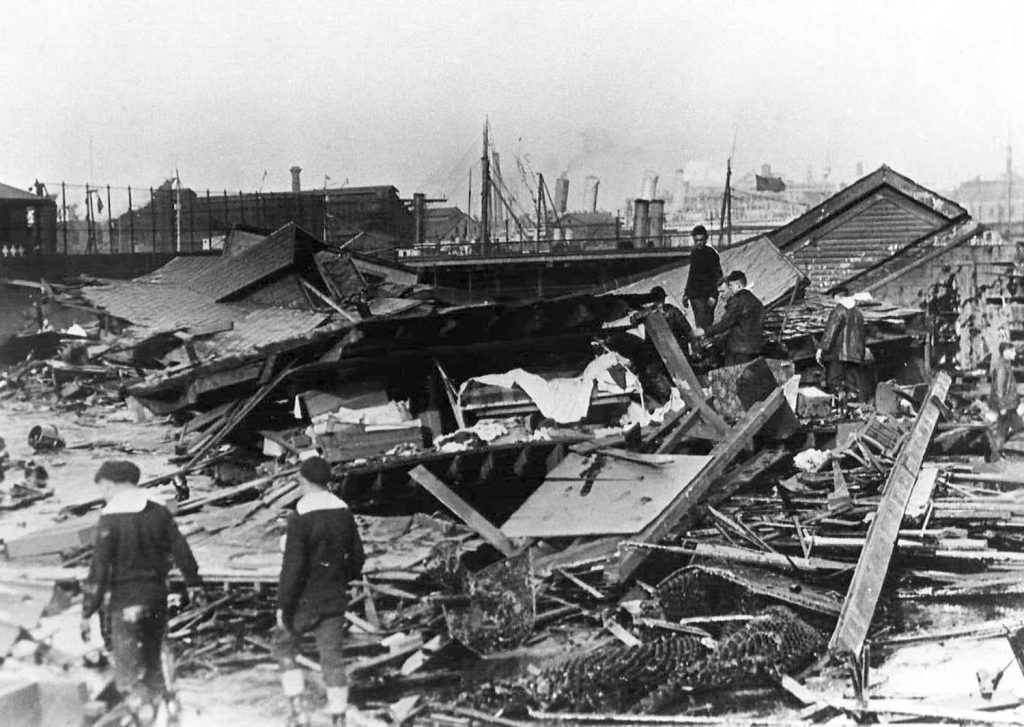
The Great Molasses Flood remains one of the most unusual industrial disasters ever recorded in the United States. On January 15, 1919, a massive storage tank in Boston suddenly burst, releasing millions of gallons of thick molasses into the streets. Within moments, a powerful wave of sticky syrup rushed through the city’s North End neighborhood, destroying buildings, damaging infrastructure, and tragically claiming lives.
Although it may sound like an odd footnote in history, the Great Molasses Flood was a devastating event that changed safety regulations and became one of Boston’s most infamous historical moments. Even more than a century later, the story of the Great Molasses Flood continues to fascinate historians and curious readers alike.
The Tank That Started the Great Molasses Flood
The Great Molasses Flood began with a massive steel storage tank owned by the United States Industrial Alcohol Company. The tank stood approximately 50 feet tall and 90 feet wide, holding an enormous supply of molasses that was used to produce industrial alcohol and rum.
At the time, molasses was a valuable commodity, especially during World War I when alcohol was used to produce munitions. The tank stored roughly 2.3 million gallons of molasses waiting to be processed.
However, the tank had problems from the beginning. Residents in the neighborhood had long complained about strange noises coming from the structure. Witnesses often reported hearing the metal walls groaning and creaking under pressure.
Leaks were also common. In fact, molasses frequently seeped from the seams of the tank. Local children sometimes collected the dripping syrup in small containers.
Unfortunately, these warning signs were ignored—until the day the tank collapsed and triggered the Great Molasses Flood.
When the Molasses Tank Exploded
Shortly after noon on January 15, 1919, disaster struck. Without warning, the giant molasses tank ruptured. The enormous steel structure split apart, unleashing a massive surge of thick molasses into the surrounding streets.
The wave generated by the collapse reached an estimated height of 25 feet and moved at speeds of up to 35 miles per hour. This unstoppable surge quickly became known as the Great Molasses Flood.
The thick liquid rushed through the neighborhood, sweeping away buildings, wagons, and people caught in its path. The force of the Great Molasses Flood was powerful enough to knock homes off their foundations and bend sections of the nearby elevated railway.
Residents described hearing a thunderous roar similar to a train rushing through the streets. Within seconds, the entire area was engulfed in sticky, dark molasses.
The Devastating Impact of the Great Molasses Flood
The Great Molasses Flood caused widespread destruction across Boston’s North End. Buildings collapsed under the pressure of the wave, and streets were buried under several feet of thick syrup.
Tragically, 21 people lost their lives in the disaster. Many others were injured as they struggled to escape the heavy molasses that trapped them where they stood.
Rescue efforts were extremely difficult. Because molasses is so thick and sticky, victims often became stuck in place. Horses and vehicles were also trapped, making it nearly impossible for emergency responders to move quickly through the area.
The Great Molasses Flood created chaos throughout the neighborhood. Survivors later described the streets as looking like a battlefield covered in debris and syrup.
The Difficult Cleanup After the Great Molasses Flood
Cleaning up after the Great Molasses Flood proved to be an enormous challenge. The thick molasses covered streets, buildings, clothing, and even the harbor nearby.
Workers used saltwater pumped from Boston Harbor to try to wash away the sticky mess. Firefighters and city crews spent weeks scrubbing streets and buildings in an effort to remove the residue.
Despite these efforts, residents claimed that the sweet smell of molasses lingered in the neighborhood for years after the Great Molasses Flood.
Some locals even say that on warm summer days, the faint scent of molasses can still be detected in parts of Boston’s North End.
The Legal Battle That Followed
After the Great Molasses Flood, the city of Boston faced one of the largest legal battles of its time. Dozens of lawsuits were filed against the United States Industrial Alcohol Company by victims and families affected by the disaster.
The legal case lasted several years and involved extensive investigations into the cause of the tank failure. Engineers eventually determined that the tank had been poorly designed and constructed.
The steel walls were too thin to handle the pressure of the massive amount of molasses stored inside. Additionally, the tank had never been properly tested before it was filled.
In 1925, the company was found responsible for the Great Molasses Flood and was ordered to pay approximately one million dollars in damages—a massive settlement for that era.
Why the Great Molasses Flood Still Matters
Although the Great Molasses Flood occurred more than a century ago, its impact continues to influence modern safety standards. The disaster helped lead to stronger regulations for industrial storage tanks and building inspections.
Engineers and city planners learned important lessons from the tragedy, helping prevent similar disasters in the future.
Today, the story of the Great Molasses Flood is remembered as both a cautionary tale and one of the strangest disasters in American history.
A Sticky Piece of Boston History
The Great Molasses Flood remains one of the most unusual and unforgettable events in American history. What began as an industrial accident quickly turned into a destructive wave that reshaped a Boston neighborhood and left a lasting mark on the city.
More than a century later, the Great Molasses Flood continues to capture the imagination of historians and readers who are amazed that such a strange disaster could actually happen.
It is a reminder that history is often stranger than fiction—and sometimes even sweeter, though far more dangerous.