
The Bat Bomb Project: One of the Strangest Weapons of World War II
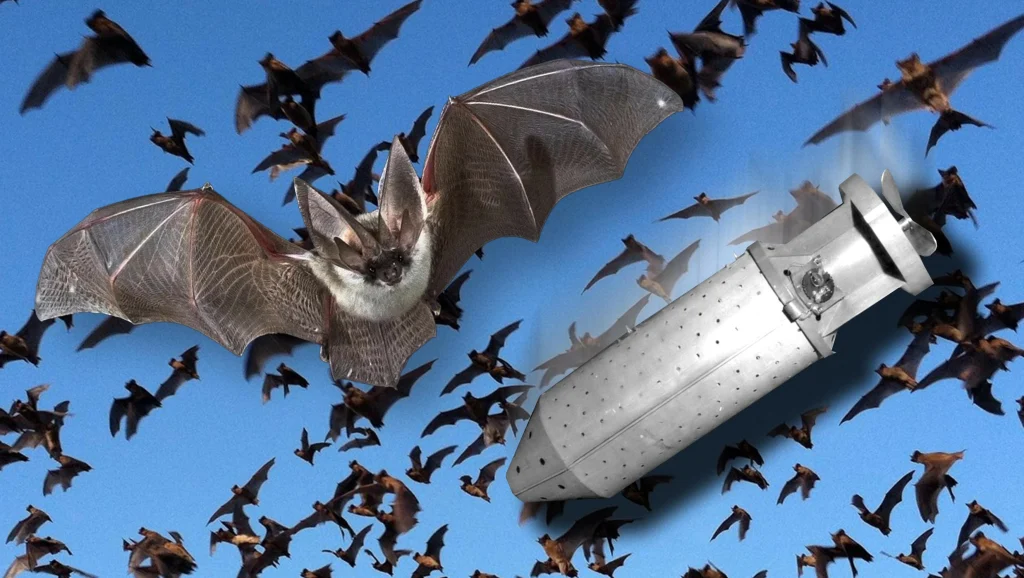
During World War II, scientists and military planners explored many unusual ideas in the race to develop new weapons. One of the strangest concepts ever seriously tested was the Bat Bomb Project, an experimental program designed by the United States military that attempted to use bats as delivery systems for small incendiary bombs.
The Bat Bomb Project was based on a surprisingly logical idea: bats naturally roost in buildings and tight spaces. If bats carrying tiny incendiary devices could be released over enemy cities, they would scatter into attics and rooftops before the devices ignited, potentially starting thousands of fires at once.
While it sounds like something from a science fiction story, the Bat Bomb Project was a real military program that progressed through multiple tests and received significant funding before it was eventually canceled.
How the Bat Bomb Project Began
The Bat Bomb Project began shortly after the United States entered World War II in 1941. The concept came from an unlikely source—Dr. Lytle S. Adams, a dental surgeon from Pennsylvania.
Adams had recently visited the Carlsbad Caverns in New Mexico and was amazed by the enormous colonies of bats that lived there. Millions of bats could fill the sky at dusk when they left the caves to hunt insects.
After the attack on Pearl Harbor, Adams proposed a creative military idea to the U.S. government. His plan suggested capturing thousands of bats, attaching small timed incendiary devices to them, and releasing them over Japanese cities.
Adams believed the bats would naturally hide inside buildings. Once the devices ignited, the fires could spread rapidly across wooden structures common in many Japanese cities at the time.
Surprisingly, the idea caught the attention of military officials and was approved for research. Thus, the Bat Bomb Project officially began.
How the Bat Bomb Project Was Supposed to Work
The Bat Bomb Project relied on a special type of bat known as the Mexican free-tailed bat. These bats were chosen because they are small, can carry relatively heavy loads for their size, and live in enormous colonies.
The plan involved placing thousands of bats inside specially designed containers. Each bat would have a small incendiary charge attached to its body using a lightweight harness. The devices were timed to ignite several minutes after release.
Here is how the Bat Bomb Project was designed to operate:
Bombers would drop containers filled with bats over enemy cities.
The containers would deploy parachutes as they descended.
At a predetermined altitude, the container would open and release the bats.
The bats would scatter and hide inside buildings.
Timed incendiary devices would ignite, starting fires across the area.
Because bats instinctively seek dark sheltered spaces like attics and roofs, the Bat Bomb Project aimed to spread fires throughout urban areas in a way traditional bombs could not.
Early Testing of the Bat Bomb Project
The U.S. military conducted several tests to determine whether the Bat Bomb Project could actually work. Researchers captured thousands of bats and experimented with ways to attach tiny incendiary devices without harming them immediately.
The tests took place at military bases in New Mexico and later in Utah. Early experiments showed that bats could indeed carry the small incendiary devices and still fly normally.
However, testing the Bat Bomb Project did not always go smoothly.
During one test at a military base, several bats escaped with live incendiary devices attached. The bats flew into nearby buildings and roosted under the roofs—exactly as the plan predicted. Unfortunately for the researchers, the timed charges ignited and caused several accidental fires on the base.
The incident actually demonstrated that the Bat Bomb Project concept could work—but it also highlighted the risks of controlling thousands of explosive-carrying bats.
The Potential Impact of the Bat Bomb Project
Military planners believed the Bat Bomb Project could potentially cause massive damage if deployed successfully. Japanese cities during World War II contained many wooden buildings that were vulnerable to fire.
Traditional bombing often destroyed only limited areas. The Bat Bomb Project, however, could theoretically ignite thousands of small fires across a city simultaneously.
Some military analysts believed the Bat Bomb Project could be more destructive than conventional bombing raids. In fact, early reports suggested the weapon might be capable of causing widespread firestorms similar to those later seen during large-scale bombing campaigns.
Because of this potential, the Bat Bomb Project received millions of dollars in funding and several years of research.
Why the Bat Bomb Project Was Canceled
Despite promising early tests, the Bat Bomb Project faced several practical challenges. Training, transporting, and controlling thousands of bats proved complicated. The timing mechanisms and delivery systems required additional development before the weapon could be used in combat.
The biggest problem was time.
By 1944, another project was progressing rapidly—the development of the atomic bomb through the Manhattan Project. Military leaders realized that nuclear weapons could end the war much more quickly than experimental systems like the Bat Bomb Project.
As a result, the Bat Bomb Project was officially canceled in 1944 after roughly two million dollars had already been spent on research and testing.
A Strange but True Piece of Military History
Although the Bat Bomb Project never saw combat, it remains one of the most unusual military experiments ever attempted. The idea of weaponizing bats sounds bizarre today, but during the intense innovation of World War II, almost any idea that might help win the war was explored.
The Bat Bomb Project demonstrates how creative—and sometimes strange—military thinking can become during times of conflict.
Today, the story of the Bat Bomb Project is remembered as one of the most fascinating and unusual experiments in wartime history. While the weapon itself was never used, the project remains a remarkable example of the lengths nations will go to in pursuit of victory.