
The Manhattan Project’s Secret Cities: Towns That Didn’t Exist on the Map
The Cities That Were Built in Secret
During World War II, the United States undertook one of the most ambitious—and secretive—projects in history: the Manhattan Project. Its goal was to develop the world’s first atomic bomb before Nazi Germany.
But what many people don’t realize is that this project didn’t just involve laboratories and scientists. It required the rapid creation of entire communities—places where tens of thousands of people lived and worked in total secrecy.
These were the Manhattan Project secret cities, and for years, they effectively didn’t exist on any public map.
Why Secret Cities Were Necessary
The Manhattan Project secret cities were created because the work being done was highly classified and extremely dangerous. Scientists and engineers needed isolated, controlled environments where they could focus on research without outside interference.
The U.S. government selected remote locations across the country and quickly transformed them into fully functioning towns. These sites included:
- Oak Ridge, Tennessee
- Los Alamos, New Mexico
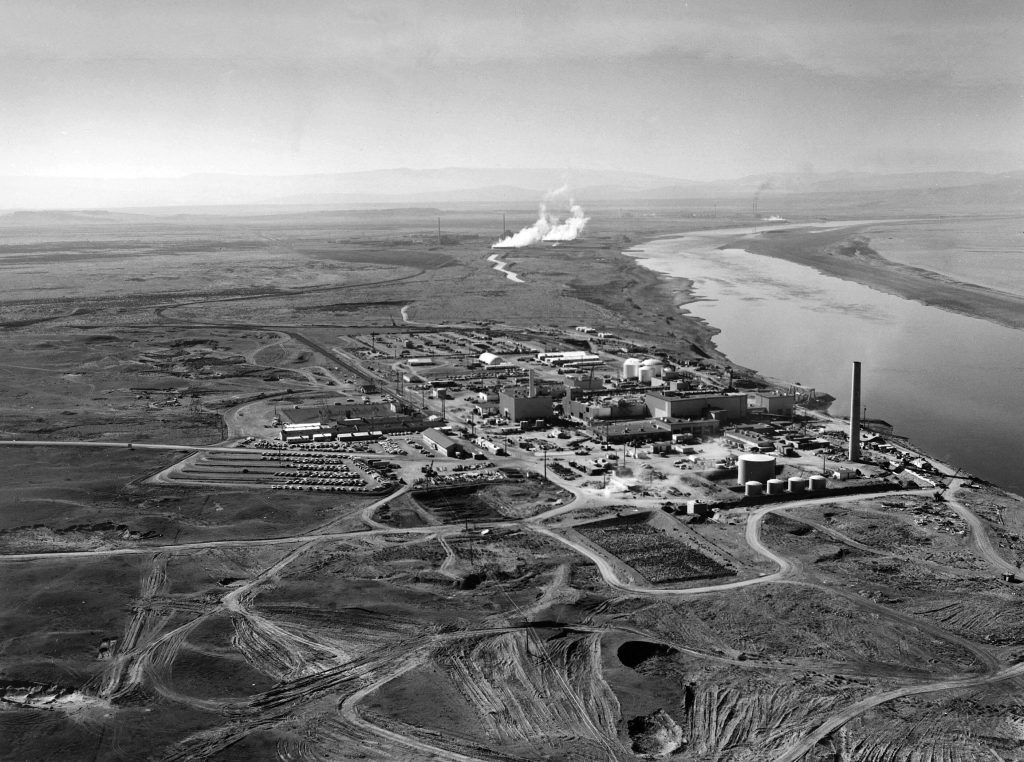
- Hanford, Washington
Each location had a specific role in the development of the atomic bomb, and each operated under strict secrecy.
Oak Ridge: The Hidden Industrial Giant
Oak Ridge, Tennessee, became one of the largest and most important Manhattan Project secret cities. Its purpose was to enrich uranium, a key component needed for the bomb.
At its peak, Oak Ridge had a population of over 75,000 people—yet it was not listed on maps, and its location was not publicly acknowledged.
Workers at Oak Ridge often had no idea what they were helping to build. Many were assigned repetitive tasks without being told the larger purpose of their work.
Despite this, the city operated like any other American town, with:
- Schools
- Grocery stores
- Movie theaters
- Housing developments
The difference was that everything was tightly controlled and monitored.
Los Alamos: Where the Bomb Was Designed
While Oak Ridge handled uranium, Los Alamos, New Mexico, was the scientific heart of the Manhattan Project secret cities.
Led by physicist J. Robert Oppenheimer, Los Alamos brought together some of the brightest minds in the world to design and build the atomic bomb.
This remote desert location was chosen for its isolation and security. Scientists lived and worked under constant supervision, and all communication was carefully screened.
Even the families who lived there often didn’t know the full nature of the work being done.
Hanford: Producing the Plutonium
Hanford, Washington, played a crucial role in producing plutonium, another essential material for atomic weapons.
The Hanford site housed massive nuclear reactors and processing facilities. It was one of the most technologically advanced—and dangerous—locations among the Manhattan Project secret cities.
Like the other sites, Hanford was heavily guarded, and access was strictly limited. Workers followed precise instructions, often without understanding the broader purpose of their tasks.
Life Inside the Secret Cities
Living in the Manhattan Project secret cities was unlike life anywhere else in America.
Residents experienced:
- Strict security checks
- Censored mail and communication
- Limited travel in and out of the area
- A constant sense of secrecy
Despite these restrictions, communities formed. Families raised children, attended events, and tried to live normal lives within an extraordinary environment.
One of the most unusual aspects was that many workers didn’t know what they were contributing to until after the war ended.
The Moment the World Found Out
On August 6 and 9, 1945, the United States dropped atomic bombs on Hiroshima and Nagasaki, Japan. These events marked the end of World War II—and the moment when the world learned about the work done in the Manhattan Project secret cities.
For many workers, it was the first time they understood the true impact of their efforts.
The secrecy that had defined their lives suddenly gave way to global recognition of what had been achieved.
Why This Story Still Matters
The story of the Manhattan Project secret cities is more than just a wartime narrative—it’s a powerful example of how far a nation can go when driven by urgency and fear.
It raises important questions about:
- Government secrecy
- Scientific responsibility
- The human cost of innovation
These cities show that history is not just shaped by leaders and decisions, but also by ordinary people working behind the scenes—often without knowing the full story.
A Hidden Chapter of American History
The Manhattan Project secret cities represent one of the most unusual chapters in American history. Entire towns were built, populated, and operated in complete secrecy, all for a single purpose.
Today, places like Oak Ridge and Los Alamos are no longer hidden, but their origins remain a reminder of a time when the future of the world was being shaped in places no one could see.
It’s a story that feels almost impossible—but it’s entirely true.